


A budget doesn’t work because it’s perfect. It works because we stick to it consistently. In reality, most people don’t abandon their budget because they don’t know what to do. They give up because it’s too restrictive, doesn’t adapt to life’s changes, or relies entirely on willpower.
The goal isn’t perfection. The goal is to create a system that’s realistic, sustainable, and easy to follow for years to come.
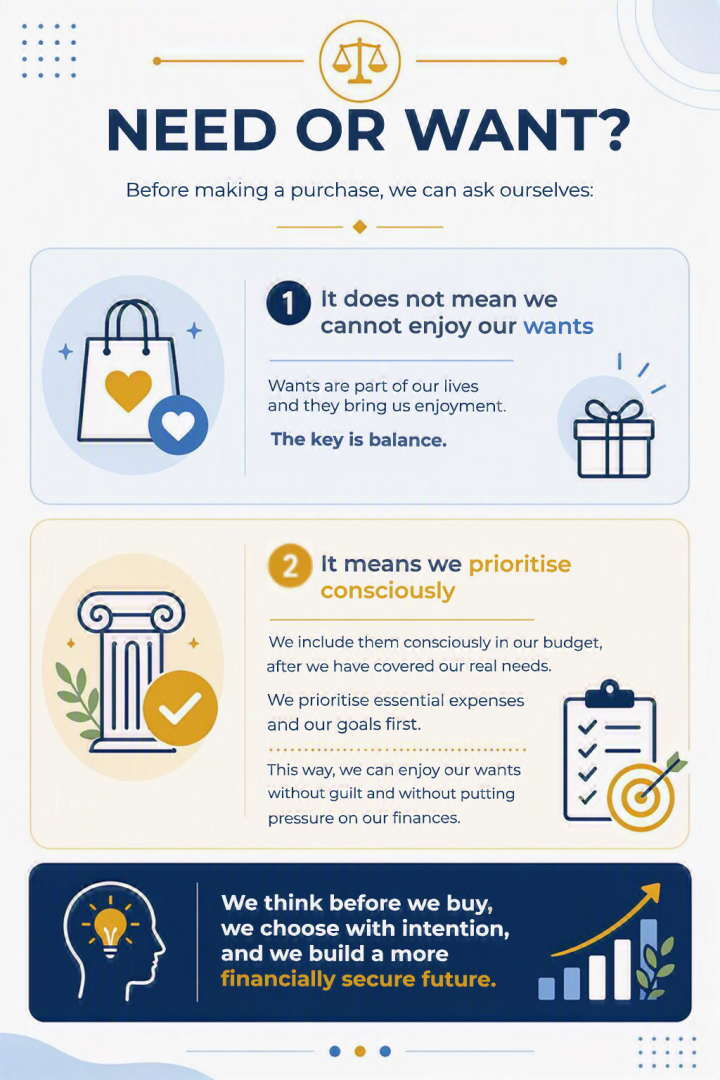
One of the most important money management skills is learning to tell the difference between needs and wants.
Needs are the essentials we rely on every day, such as:
- Housing
- Groceries and food
- Transportation
- Utility bills
- Insurance
- Healthcare
Wantsare expenses that make life more enjoyable but aren’t essential.
For example:
- Dining out
- Streaming subscriptions
- Buying clothes beyond what we truly need
- High-end gadgets and electronics
- Frequent impulse purchases

Understanding this difference helps us make smarter spending decisions and keep our budget aligned with our financial goals.
⚠️ A Quick Reminder
Separating needs from wants doesn’t mean giving up everything we enjoy. A sustainable budget should leave room for entertainment and personal spending. The key is to decide consciously how much we can afford to spend.
Many people save whatever is left at the end of the month.
The problem is that there is often much less left over than expected.
A more effective approach is to treat savings as one of our first financial priorities.
As soon as we receive our income:
- Transfer the amount we've committed to saving.
- Cover our essential expenses.
- Use the remaining funds for other spending.
This approach turns saving into a habit rather than something that depends on having money left over at the end of the month.
Self-discipline is important, but nobody makes perfect financial decisions all the time.
That's why it's better to create systems that make good choices easier.
Examples include:
- Automatic transfers to a savings account
- Automatic bill payments
- Budget overspending alerts
- Regular weekly reviews of our spending
💡 Helpful Tip
The fewer financial decisions we need to make each month, the easier it becomes to stay consistent.
Life circumstances are constantly changing.
Our income may change, household expenses may increase, new goals may emerge, or unexpected costs may arise.
That's why it's important to ask ourselves every month:
- What worked well?
- Where did I spend more than planned?
- What can I improve next month?
A budget is not a fixed document. It should evolve along with our life.
Even a well-designed budget can fail if we fall into some common traps.
➡️Creating a Budget That Is Too Restrictive
If we cut every expense too aggressively, we're more likely to become frustrated and give up.
➡️Forgetting Irregular Expenses
Insurance premiums, holidays, car maintenance, and seasonal spending shouldn't come as surprises. Setting aside a small amount each month can help us prepare for these costs.
➡️Not Tracking Our Spending
A budget that isn't regularly updated is simply a guess.
➡️Getting Discouraged After a Difficult Month
Everyone goes over budget from time to time.
That doesn't mean we've failed. It simply means we need to make adjustments and keep moving forward.
➡️Comparing Ourselves to Others
Every household has different income levels, responsibilities, and priorities.
The only budget worth comparing is our own progress compared to where we were a year ago.
- A budget succeeds when it is followed consistently.
- Learn to distinguish between needs and wants.
- Pay ourselves first by making savings a priority.
- Create systems that make good financial decisions easier.
- Review and adjust our budget every month.
- Focus on steady progress, not perfection.
👉 What’s next...
Consistently following a budget provides a solid framework for making everyday financial decisions. However, managing money effectively involves much more than simply tracking income and expenses.
In the next article, we will explore how to connect our budget to our financial goals, identify the challenges that affect our day-to-day finances, and build a practical system that helps us manage our money with greater confidence, consistency, and peace of mind.
🔗Useful Links
- What Is Saving and Why Is It Important?
- Emergency Funds: Our Financial Safety Net
- How to Set Financial Goals We Can Actually Achieve
- Managing Debt Responsibly
- Why Do We Invest and When Are We Ready to Take the Next Step?


